Come to trace through smoke offers a vast cartography of the circulation of our emotions when confronted with extreme events, inviting us to rethink art in light of our postcolonial and environmental legacies.
Description
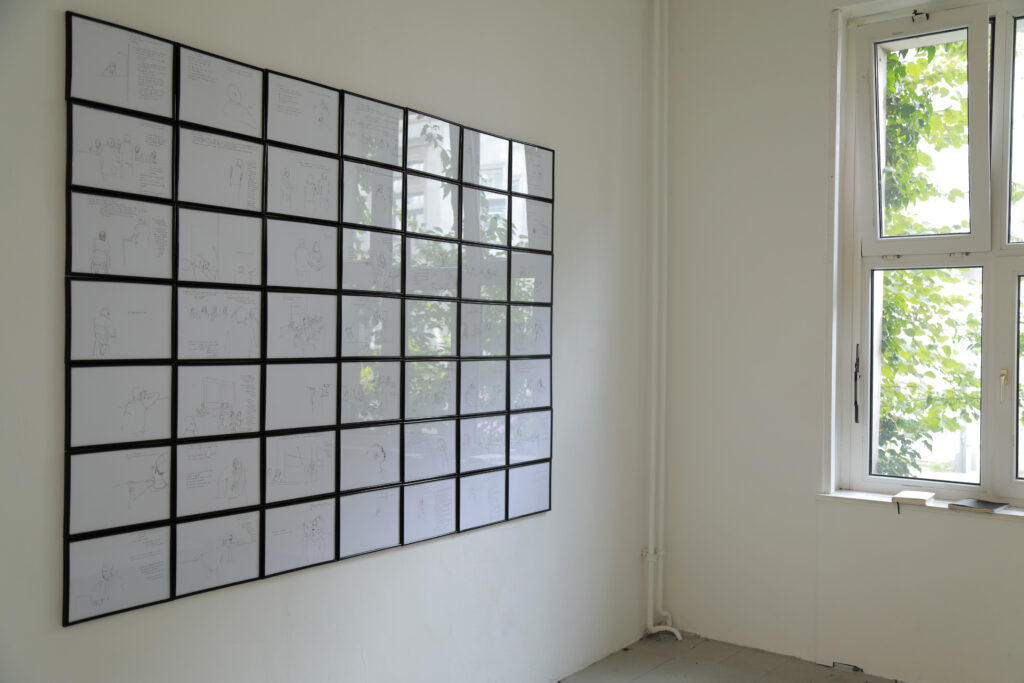
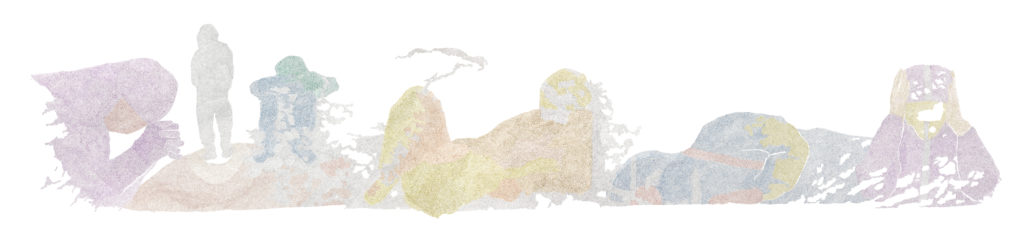
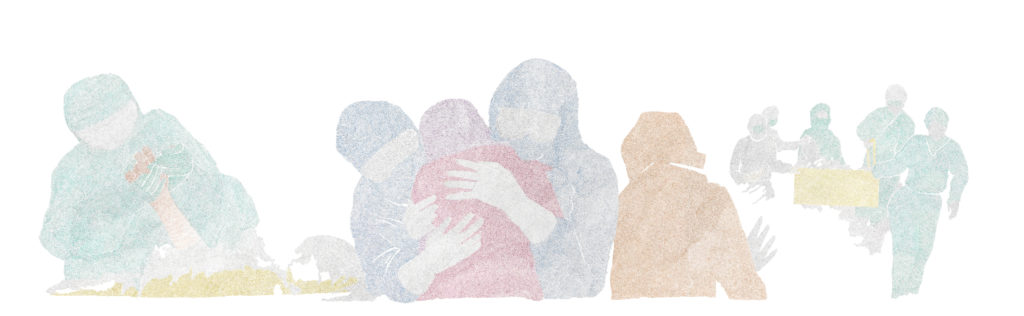
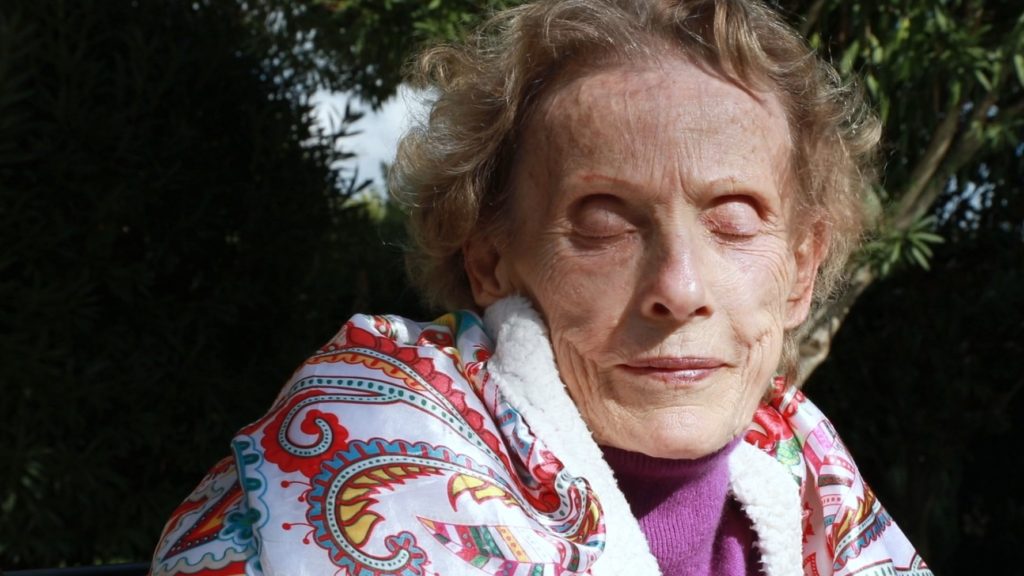
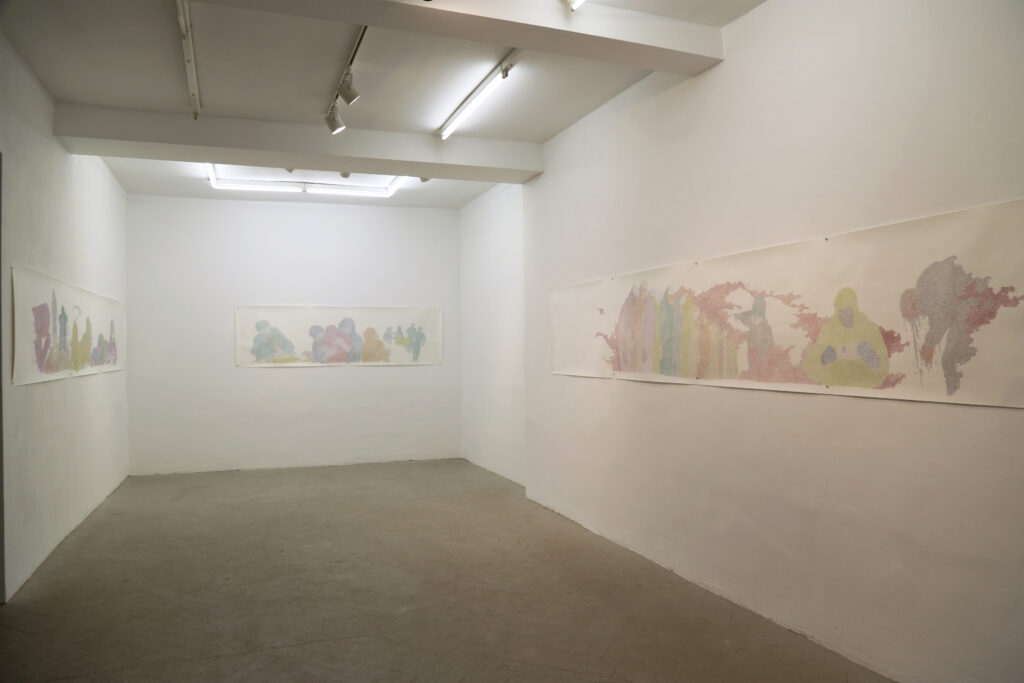
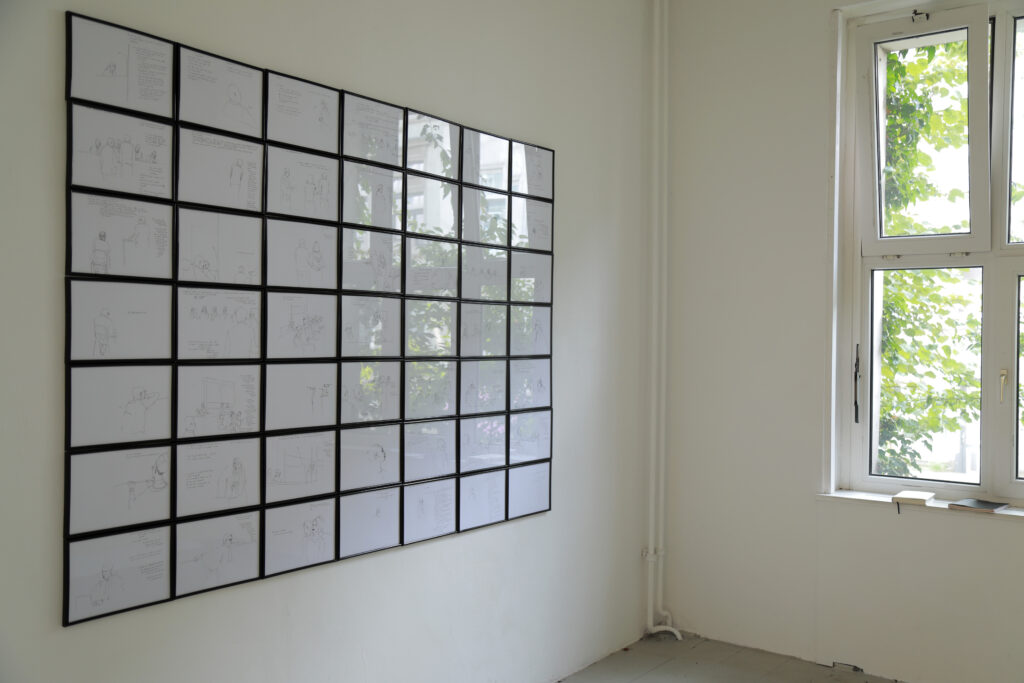
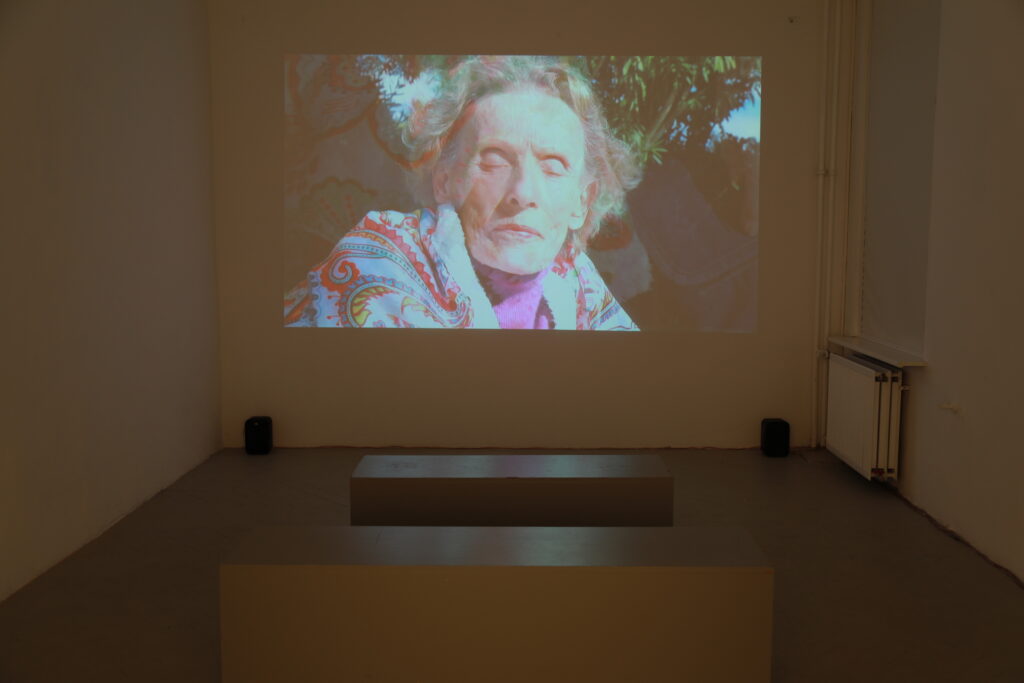
For her exhibition at FRISE, Natacha Nisic brings together three bodies of work that map human emotion in moments of extremity. Saint-Désir l’Exil (2021) pairs images filmed inside a nuclear power plant with the serene face of the artist’s mother shortly before her death. The ongoing drawing series Fukushima (since 2013) draws on anonymous figures of nurses, rescuers, and emergency workers captured in crisis. Media images from the 2011 triple disaster and the later pandemic become delicate, metallic webs of gestures and postures. Les fumées (2018) emerges from Nisic’s three months following the genocide trial of two Rwandan mayors in Paris. Unable to record the proceedings, she sketched defendants, witnesses, jurors, and lawyers as living echoes of the 1994 events in Kabarondo. The drawings, accompanied by notes and transcript fragments, form a fragmented archive—an attempt to hold memory against extreme violence.
One cannot emerge unscathed from a catastrophe one has lived through or suffered, just as one cannot leave paradise unscathed: one emerges from the latter as a fallen person, from the former as a miraculous survivor. The same applies to representation. In order to depict a paradisiacal place or describe a catastrophe, one must approach it from the side, shift the frontality of the indescribable, take a step to the side, and open oneself to an oblique approach. (Florent Perrier on the work of N. Nisic)
With the kind support of the Hamburg Ministry of Culture and Media and the Altona District Office