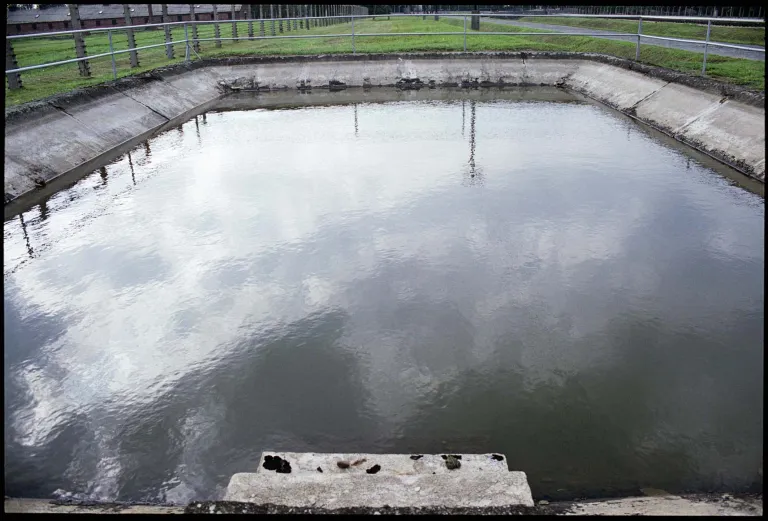
Reservoir, photography argentic, color, 110×80 cm, 2005
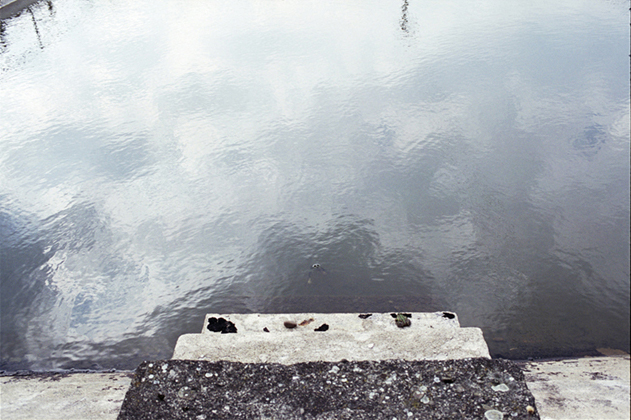
Reservoir, photography argentic, color, 110×80 cm, 2005
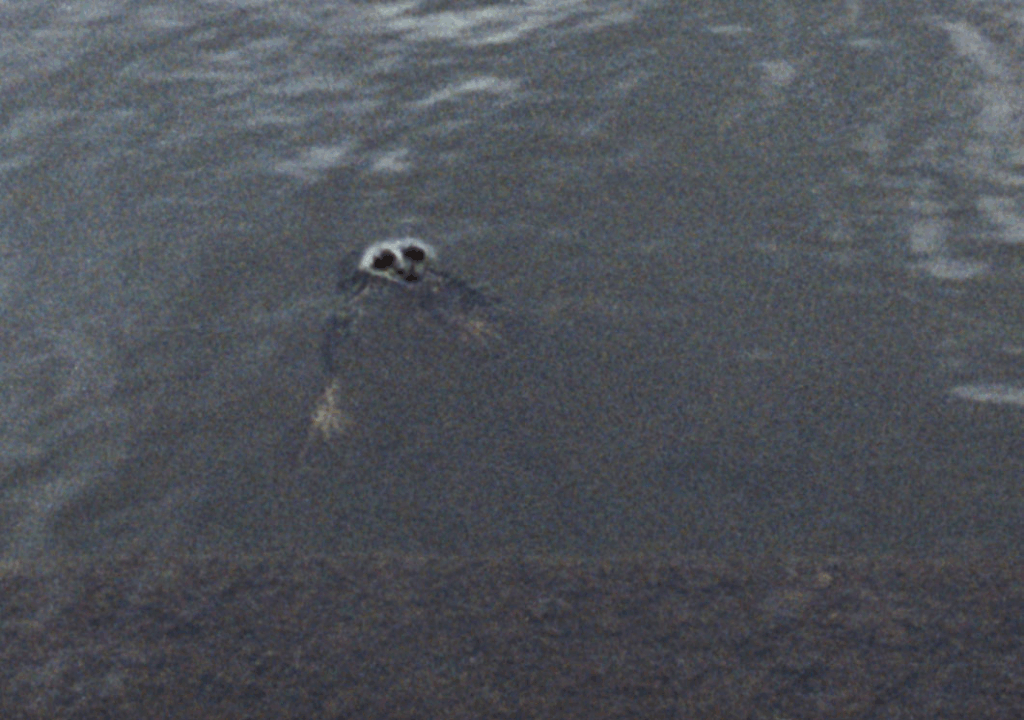
Effroi- Réservoir 2, detail, argentic photography, color, 0,35 x 0,35m, 2005
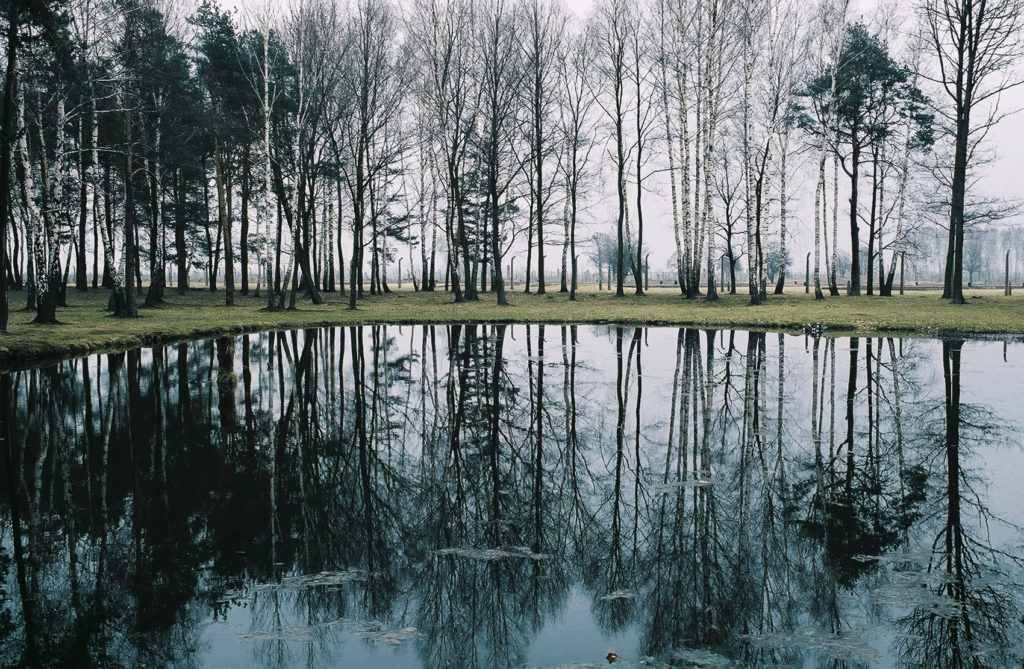
Pond with ashes, 110×80 cm, 2005
Natacha Nisic conceived the exhibition Effroi (Dread) following a trip to Auschwitz, where she had come to make the film “La porte de Birkenau” (The Gate of Birkenau) for the Shoah Memorial. At the end of filming, she took two photographs of a reservoir in the camp. In the left corner of the reservoir, on the steps leading down into the water, stood a frog. As she was about to take a second photograph, another frog emerged from the bottom of the water. It was only when she developed and enlarged these photographs that she discovered a frightening shape appearing in the stagnant water.
The decision to question the status of this image, as well as whether or not it was possible to respond to it, came later. In March 2005, Natacha Nisic returned to the scene of this first unusual experience “to try to challenge this twist of fate: to film the action.”
In the action, the artist, barely visible in the frame, dives into the water, immediately emerges, and runs away. “This film is a response to the photographic act and what it provoked, like a reversal of the image process, a work in negative. Life returned to the surface of the water, returned to the pond and what it contains.”
Effroi is situated in a zone that questions the modes of transmission of memory. We find ourselves there, faced with terror, in between, unable to move forward or backward. Showing the photographs alongside the film questions the very status of images. “How the invisible is made visible when the photographic trace goes beyond the retinal impression. The image lies in the interstice between what we thought we saw and what we believe we see, in a field between symbolic interpretation and documentation.”
The exhibition presents other photographs, taken in or near the camp (La mare aux cendres, La Vistule) and a film, shot in Bierun, 4.5km from Oswiecim, which extend the reflection on the memory of places. The artist has also taken particular care to reproduce the sounds and songs of birds that can be heard today in the camp.
In echoing this, Natacha Nisic found a resonance with her own experience in certain works by Ossip Zadkine, created between 1943 and 1944, and through his accounts of the period.